
Each week we feature a different Scottish artist on the blog including premieres and Q&A’s. Please check out some of the amazing Scottish talent we have discovered over the years.
If you would like to submit a track please get in touch 4 weeks in advance of the release - resonatescot@gmail.com




Check out our Resonate Artist of the Week Spotify Playlist here
Q&A: The Rosellas
“I've had hours of conversations after the set with locals, talking all about the importance of Scotland to my family, and in turn learning more and more about the heritage of the country and its importance to them. I find it very soul affirming and will spend hours more continuing to do so.”
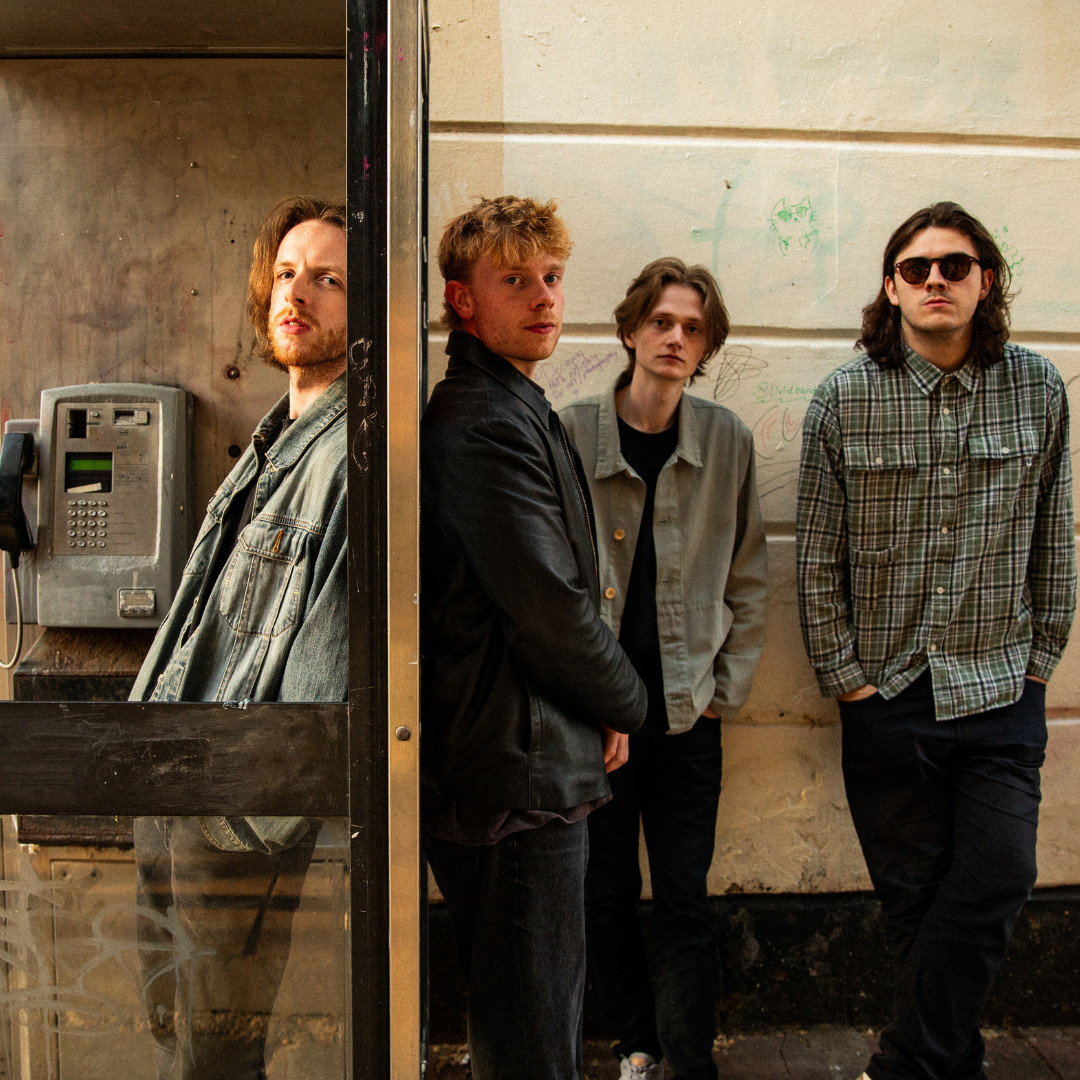
Fresh off the release of their new EP Every Beautiful Night, Manchester four-piece Rosellas are making serious waves with their signature blend of anthemic indie-rock, catchy hooks, and thoughtful, relatable lyricism. Following on from lead singles Eyes of the World and Get Over Yourself, the band deliver a polished five-track collection that’s already making noise across radios, pubs, and playlists nationwide.
Drew, Euan, Ollie, and Mark have crafted songs that speak to ambition, passion, and the every day grind - aiming to put guitar music back at the heart of the industry. Though they're proudly Mancunian, Rosellas have a strong connection with Scotland, and we caught up with them to hear their take on the Scottish scene, what keeps drawing them back, and what’s coming next.
Check out the Q&A with Drew from the band below:
1. You're a Manchester band, but we're curious – what's your connection to Scotland? Have you spent much time here, musically or otherwise?
Scotland holds a very special place in my heart, I see it as my second home. The love for Scotland stems from my grandparents, they began travelling the highlands together back in the 1950s and built a collection of maps, home videos and souvenirs from their travels. They kept these things all over their house and I have very early memories of looking at maps and photos with them as they described all the places they've been.
For as long as I can remember, we'd travel up to the highlands as a family two or three times a year, every year, climbing every Ben and Glen we could find, right up until my late teens when they sadly passed away; they willed us to spread their ashes to the wind from the top of Ben Nevis. We'd travel all over; out to Skye, Lewis and Mull, up to the sandy beaches of Arisaig and Mallaig, up north to Ullapool and Lochinver, out west to the gorgeous Cairngorms and Inverness, we covered some serious miles. Their absolute favourite place, and the place most special to me and my family, was a little village we used to stay in at the foot of Ben Nevis called Banavie. Fort William was always our base of operations when we'd go out on these long drives, sometimes staying the night on the road if we'd driven for a few hours.
The natural beauty you find in places like Glen Nevis and Glencoe is to me, the most beautiful thing our planet has to offer. The history of Scotland (right back to the Pictish resistance to Roman invasion, the clans and battles for independence, through to the Jacobites and Scotland's part in the expansion of the British empire) has always absolutely fascinated me, probably due to my Dad's vested interest in History, and my obsession with wooden swords and bows as a kid. We visited hundreds of castles and battlefields all over the UK throughout those years, most predominantly in Scotland; Culloden, Eilean Donan, Urquhart.
Since the passing of my grandparents, I have travelled up to the highlands as much as physically possible, revisiting the places we travelled and making new discoveries to pass down to my kids when the day comes. It has become a sort of rite of passage for my whole family; we take all the youngsters up there and explain the historical importance of the area not only to Scotland, but to our family and the legacy of my grandparents. I will live in the highlands one day, of that I am certain.

2. What’s your take on the Scottish music scene from the outside looking in? Anything that stands out compared to the scene down in Manchester?
From what we've experienced playing gigs in major Scottish cities; Glasgow, Edinburgh, Aberdeen, the Scottish scene seems quite similar to the Mancunian scene. There is a lot of quality bands producing good music, and everyone is sound and welcoming. We've always made an effort to introduce ourselves and converse with the bands we share bills with, especially if they are supporting us, and the Scottish musicians we've met have always reciprocated this.
Coming up in the scene in Manchester we had a few experiences supporting other bands where the atmosphere when you walk in the venue is instantly a little hostile, there's no "hey up mate how are you?" going on, it's a bit 'battle of the bands' – not from us, just the vibe we'd catch from others. This didn't happen all the time, but enough to become aware of it. We said to each other, when we get to the level where other Manc bands and bands travelling from other cities are supporting us, we'll always make an effort to shake hands and go for a pint or kick a ball about for a bit or something. The Scots know this language well, so we'll always have the time of day for them.
Another thing I love personally about the Scottish music scene is the folk scene. You'll find yourself in a pub, especially up in the highlands, and there will be someone playing some form of traditional Gaelic music – I can't not smile and feel warmth in my heart when I hear or see it, and I'm not even Scottish. It's almost just seeing the pride it puts on local people's faces in the audience that gets me, I just think to myself 'that's brilliant' that the music connects with the musician, connects with the listener, connects with the heritage, connects with the national pride, and so on. I can recall one time I was staying in Glencoe over Christmas and New Year and found myself in the Clachaig Inn on New Years Eve. There was a folk band on playing all sorts of stuff and it was absolutely rammed to the rafters with Scots and travellers alike erupting into choruses of Wild Mountain Thyme, The Skye Boat Song and of course Auld Lang Syne – fantastic to hear and be a part of.
3. What is it like playing in Scotland, and how do the crowd treat you?
To be honest, we haven't played in Scotland anywhere near the amount we would have liked to, but there's time for that yet. Every time we've played though it's been great, the Scottish have always been very warm and welcoming. I feel there is a love up there for guitar music, you know with bands like Jesus and Mary Chain and Primal Scream and Gerry Rafferty all originating up there. We've sold out a few shows of our own in Glasgow and Edinburgh and have played some pretty cool venues like SWG3 and The Caves while supporting other bands. I found at those support gigs that once we get going and I get to chat to the crowd a little bit, I can drop in here and there why Scotland means so much to me personally and in turn is a real place of ambition for the band, the crowd come round to us and pay attention to what we're playing.
I've had hours of conversations after the set with locals, talking all about the importance of Scotland to my family, and in turn learning more and more about the heritage of the country and its importance to them. I find it very soul affirming and will spend hours more continuing to do so.

4. Are there any Scottish artists that have made a lasting impression on you – whether it's someone legendary or a newer name breaking through?
My mum is a big Gerry Rafferty fan, I can't hear a song off City to City or Night Owl without thinking of her immediately. She played those two albums so much to me as a kid it's ingrained in my brain, I think he's brilliant. A discovery I made more personally as I got older though was Paolo Nutini. I'd been aware of him since being younger with songs like New Shoes and Last Request from his These Streets album kicking about, but the first album I got into was Caustic Love. Man, what a groove Scream (Funk My Life Up) is! My sister and I went to see him in 2015 at Castlefield Bowl in Manchester when he toured. It was that album that really got me interested, but his most recent album Last Night In The Bittersweet absolutely captivated and consumed my ears for months and months. It quickly became one of my favourite albums of all time, lyrically and melodically, with the warmth and vibe of the recording and production, and the psychedelic elements that elevate the atmosphere in certain sections, making it a phenomenal piece of work. I saw it live when he toured and it just reaffirmed my respect for him as a singer and musician – I think he has the greatest vocal around in music today.
5. What is it about Scotland that keeps you coming back – the crowds, the venues, the atmosphere… or something else entirely?
What brings us back to Scotland? The people. The music lovers. Every venue we've played, every gig we've done, we've met and shared moments with people who genuinely love music and are committed to doing THE most vital thing that keeps the music industry alive: supporting the underground scene. Without those people who choose to spend their hard-earned money on supporting bands like us, trying their best at breaking through, there wouldn't be the next Oasis, the next Sam Fender. It's this way in a lot of the cities we travel to and back in our home town, but you find that some places more than others have this feeling of loyalty and of community, and every crowd we've played to in Scotland gives us that feeling. For me personally, the spirituality of the place and its meaning constantly beckons me and I continue to travel the highlands as much as I physically can. Being signed by a Glasgow label also means that I have the chance to drop into HQ on my way past and hang with those guys for a bit, they're great!
6. What’s next for Rosellas – and should Scotland expect to see more of you in the near future?
Absolutely. We're releasing a lot of material over the next 18 months, following off the back of the recent EP Every Beautiful Night, building up to that all-important debut album. We've worked hard at this since the day we formed, all working full time jobs simultaneously to fund it. It now feels like we're on the road to making an actual living out of this. We don't want for fame and fortune, only to be able to do this – what we love most in the world – as our job. We're therefore pushing on now harder than ever, gigging more, writing more, recording more. With that comes playing in Scotland, which we have been keen to do more of for a long time. We're pushing for slots at festivals and support slots so we can begin to build a real following up there and eventually sell out big venues ourselves. The one for us is Barrowlands. That's what we've set our crosshairs on.
Q&A: Aylee
“I hope that if anyone listens to Dressed Up and relates to the lyrics, they take it as a sign to step back and reflect on why it resonates with them. I want to help anyone who’s caught in a similarly toxic situation feel less alone and isolated. While yes, “I hate that all my friends were right” about my previous relationship, I’m incredibly grateful to be so far removed from it now, and able to look back and see that they absolutely were.”

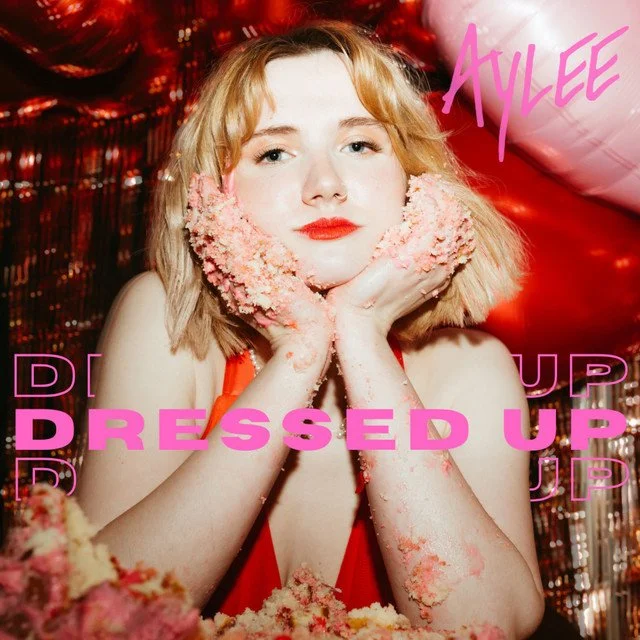
In her bold new single Dressed Up, Aylee pulls no punches. Turning raw emotion and lived experience into a fiercely cathartic anthem. Born from the aftermath of a toxic relationship, the track explores themes of emotional manipulation, betrayal, and the often-dismissed power of female rage. With unflinching honesty, she channels not just heartbreak, but the relief and clarity that follow survival—and does so with self-produced, distortion-fueled intensity. In this interview, she opens up about the healing process behind the song, the strength in vulnerability, and why embracing anger can be a vital part of reclaiming your voice.
Check out the Q&A below:
1. Your new single “Dressed Up” is incredibly raw and emotional—can you tell us what inspired the track and what the writing process looked like?
I wrote Dressed Up after coming out of a particularly toxic relationship. I had spent months writing sad, heartbroken songs about the breakup, but this one felt different. As soon as I came up with the line “a lucky escape dressed up as a heartbreak,” I knew I wanted the track to channel the anger and sheer relief I felt at finally being free from such a controlling situation.
Heartbreak is far from an underrepresented topic in music, but I really wanted to explore the betrayal and the anger that can come with it, which, sadly, is also a very common experience. I’ve come to realise that female rage is often dismissed or labelled as “crazy.” I mean, I can’t count how many times I’ve heard someone say, “Oh yeah, my ex was crazy.” But with Dressed Up, instead of pushing down that rage or fearing the label, I chose to embrace it, because I genuinely believe female rage is not only valid, but incredibly important. I refuse to let someone else’s actions define me. This was my experience, and if writing about how someone mistreated me makes me “crazy,” then honestly, I’m okay with that.
The actual writing process is a bit of a blur now. I didn’t start with the title, which is usually how I write. I just picked up my guitar and began writing what I thought would be another heartbreak ballad, but pretty quickly, I realised that wasn’t what this song wanted to be.
2. You’ve said this song came from a place of deep hurt and reflection. What was the turning point for you emotionally that led to creating it?
I feel like there wasn’t a specific turning point that stood out to me. I know it should have been when all of my friends and even my therapist told me to leave the situation, but when you’re so deeply invested in something, it can be difficult to see it for what it is. I was always so entangled with what it “could be” if only I had been treated better.
I could go so deeply into the ins and outs of it all, but I guess once I finally had some distance from the relationship, I could finally see it the way those closest to me had; they didn’t view everything through rose coloured glasses and weren’t caught up in the manipulation or lies I was being constantly fed. Looking back I fully understand why they wanted me out of it but when you’re trapped in an emotional situation it isn’t always as easy as just walking away, I mean I had tried but every time I did something dramatic and outof control would happen and I’d end up right back in it, which again, looking back was some top tier manipulation and again happens all too often.

3. Compared to your previous single “Good Enough,” “Dressed Up” feels darker and more introspective. Was that a conscious decision, or something that unfolded naturally?
I wrote and produced both of these tracks very close together, I think ‘Good Enough’ was a turning point for when I started to see my selfworth and I guess ‘Dressed Up’ goes hand in hand with it as it sort of explains how I got to a place where I felt ‘not enough’ and ‘too much’ at the same time. I don’t think I consciously decided that ‘Dressed Up’ was going to be dark and angry until it came out, and suddenly it just was.
4. The song explores heavy themes like emotional manipulation, gaslighting, and narcissistic abuse. How did you find the courage to put such personal experiences into your music?
As I’ve grown as an artist, I’ve found that the music I’m most drawn to, and that inspires me to write, is always the most honest. When it comes to something like emotional abuse, sadly, it’s so common that I knew it was a topic many people could relate to.
I wanted to share my own experience because when you’re in that kind of situation, it can feel incredibly isolating. Emotional abuse often includes textbook tactics like trying to isolate a partner, and while I always stayed true to my friends, I definitely felt very alone at times. I’d find myself lying about my ex’s behaviour or making excuses for them, probably in an attempt to ‘protect’ the relationship. But in the end, keeping all of that to yourself only makes the loneliness worse. I wanted to show that it doesn’t have to be like that. No, it’s not always as simple as just leaving, and yes, I completely understand the fear of judgment. But if the people closest to you are concerned about how you’re being treated, maybe it’s worth considering that they have a point. They only want what’s best for you.
So I would say that some space and perspective inspired me to share this fairly heavy experience.
5. You produced “Dressed Up” entirely by yourself. What was that process like— especially working on such an emotionally charged song alone?
I think initially I had the lyric “you say that I’m a saint but I’m not one for praying, claim I deserve more god that’s an understatement’ because I was constantly told that I was a saint and that I deserved better by my ex. I had those lyrics and a rough melody accompanied by my acoustic guitar, so initially this song started off fairly stripped back and sad, much like the other tracks I had written but as soon as I had the hook I knew I was on to something and I just knew I wanted to let the anger that had been building for all those years out.
When I write, I tend to build a rough loop in logic to get a general vibe for the track, so often the production leads the writing for me. I remember messing about with the bass and just adding more and more distortion until I had this furious sound to write around.
I love collaborating with other people, but I do find that when I write and produce alone, I tend to be more honest with myself, and I feel that often translates in my lyrics and production. I usually start my loops with a mixture of samples of my voice and chords, and just take it from there, but this time round, I specifically remember finding the bass sound and loving it. At no point when I wrote this song did I struggle to find the next line, lyric or where the production needed to go; it all just kind of poured out of me, so I’d say the writing and production process was cathartic. I remember feeling as though a weight had been lifted once I finished this one.
6. You’ve mentioned artists like Muna, Sabrina Carpenter, and Billie Eilish as influences. What about their work resonates with you creatively?
I think all of these artists have such unique perspectives and writing styles, so there’s a lot I could dive into here. With Muna, I’m obsessed not only with their lyrics and the meaning behind the tracks, but also with the production - every song is so catchy. They’re incredibly skilled at making even minimal sounds feel interesting and full of emotion. When it comes to Billie Eilish, I deeply connect with her lyrics, and once again, the production stands out, each track is so distinctive. I feel like I could listen to one of her songs made up entirely of layered vocal harmonies and still fully understand the emotion behind it. Her voice is so rich and stunning, I could honestly listen to it all day. And with Sabrina Carpenter, I’m just truly inspired by everything she does. Of course, her production is flawless and super catchy, but it’s the lyrics that really get me. They’re so clever, and the way she weaves in a tongue-in-cheek attitude, laced with satire, wit, and humour, is something I really aspire to as a songwriter.
7. Looking ahead—what’s next for you after this release? Any live shows, music videos, or collaborations in the pipeline?
Later this year, I am beyond excited to be releasing another few songs as well as hopefully getting out and gigging again! I’ll be releasing both a live visuals version of Dressed Up as well as a mini stripped-back version titled ‘Dressed Up, Dressed Down’. Other than that, I’m just focusing on writing more and hopefully working with some other artists on their material, which is exciting! I definitely want to keep up this momentum I’m building since I’ve been getting such a kind and welcoming response so far, which I am beyond grateful for!
8. Finally, what do you hope people take away from listening to “Dressed Up”? Is there a message you’d like to leave with anyone who might be going through something similar?
I hope that if anyone listens to Dressed Up and relates to the lyrics, they take it as a sign to step back and reflect on why it resonates with them. I want to help anyone who’s caught in a similarly toxic situation feel less alone and isolated. While yes, “I hate that all my friends were right” about my previous relationship, I’m incredibly grateful to be so far removed from it now, and able to look back and see that they absolutely were. I think it’s important to mention, and to remind people, that abuse comes in many forms. One of the most common is emotional abuse, which includes gaslighting, manipulation, lying, and a whole range of other deeply harmful behaviours. No one deserves to be treated like that—and if you have been, it’s okay to feel angry about it.